Mental Emergencies, a New Urban Seismograph
▻ Français
Emergency rooms are privileged observation posts to discover what psychiatry can reveal about a city. These places of receptions, replicating the model of fast food that is accessible twenty-four seven, were first imposed in major American cities and in Europe, and are currently present in all medium-sized cities. Their role in maintaining urban equilibrium is to evaluate the possibility for consultants to come to terms with their environment. They also can offer hospitalized help in accordance with the level of their individual condition or the threat these conditions represent.
For over twenty-five years, I practiced on the front lines of psychiatry in various urban contexts – metropolises, suburbs and small towns, each belonging to various regions and continent. I found that these various urban environments each generated specific and identifiable psychological symptoms. Thousands of patients I have treated have very often revealed to me their personal histories as well as the history of the territory that they inhabit.
In the initial instance, emergency psychiatry in big cities will tell us how a city is structured, indicating the place and role of various spatial elements that compose them. In a second step we will see what emergencies can we learn from wider territorial units in which part of the outlying towns and suburbs, or they moved, each time we will rely on tables that repeat identical symptomatic frequently enough to characterize urban clinics significant units.
1 – The globalized metropolises: the elements.
The major international cities, around the world tell us that, across cultures, urban spaces constitute themselves as a true language. Like language with nouns, syntax and punctuation space is available, and combines cutting in terms of places, paths and borders. Annexed by the mind each of these sequences generates its own clinical expressions which in turn give us information on both their state and their current trends.
UNCERTAINTY OF PLACES.
Ms. Else arrives conduct by police, agitated, she protested, she claims to have fired by heating in the kitchen with papers. Sixty, without work or family, its history is intertwined with an apartment she increasingly difficult to pay, in a building that resembles more, with new tenants in a neighborhood that is changing. Crime or madness? That is the question posed by the police. Of course in this case is a mere accidental negligence, quickly settled, but as for Ms. Garbo his balcony using dangerously high and like many others we have to relocate it as a precaution at least temporarily, against his will. Happy ending for Ms. Else, neighbors worried came to the emergency room without even knowing it in order to surround and help. Reclaiming its environment through this therapy territorial wealth, she immediately regained his composure and his mobility, she returned to her home, like me reassured.
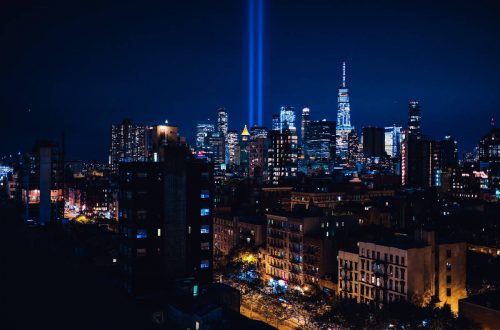
Precarious housing conditions as their disconnection from familiar surroundings are not only rush the frail isolated elders, they also undermine the independence movement of younger people. In Montreal, for twenty years, the percentage of young people returning to live with their parents increased from 10 to 30% and Toronto, their future home is for parents of middle-class one of the biggest concerns. If the film Tanguy has been so successful is that it is part of a trend that is spreading. Beyond the critical ages, stigmatized groups or displaced are also particularly affected by the weakening of their habitat. The hosts emergency distress, regressions, domestic violence, suicide attempts see autism home. This intimate clinical evidence of the pressure and current, places that do not stop at the private home as soon as we have described, but includes extensions: area, suburbs or ghettos, and sometimes the entire city – and from this point of view the New York Post September 11 is exemplary. Metropolitan emergency psychiatry is in direct contact with the metamorphoses but especially with the weakening of the places that are at the heart of our spatial equilibria, their destabilization, temporary or more structural uprooted, exiled or known to throw the most vulnerable populations including the youngest of them.
The THRASHING PATHS.
Among the young nomads in Montreal (average age twenty), the suicide rate is seven times higher than the already high average in their age groups, and 40% of them suffer from mental illness and have made suicidal attempts. For these travelers, the most common request when we meet them is that they take over, temporarily, their trajectory, which gives them a break. Accommodation for them or at least that locates them. The more or less disruption of their journey in which their identities are based, allows an assessment of the clinical stage of drift space and allows therapeutic responses adapted to each case. « Yes, I have my next emergency. It is still there. I return, I talk about me is family, this young Parisian revolving-door in orbit, based on us, and simply repeated passages in the emergency sufficient to harmonize his movements. Julie « scattered in several places, hospitalization is needed to release a movement she repeated until exhaustion. A therapeutic approach that will pass by isolation, free circulation in the department of psychiatry and then in the hospital, measured out on the town and finally back to his orderly existence around the outbreaks. In a society built around speed and displacement, a cure will often allow trips to regain mobility is ordered that the necessary step in regaining its integrity.
The explosion of these new diseases of wandering expresses more uncertainty attached to travel, no man’s land threatening to those who are captive but also for those who merely pass through. Evidenced by the many victims of the famous dodo metro job, Daily transhumance because they are also affected by a potential symptomatic. It occurs mainly in the mode of stall: fainting, dizziness, falls or panic attack for those using public transport, incidents, accidents or road rage for individuals driving these free electrons clearly indicate the role of journeys at the level of psychic harmony in the world where urban landmarks become crazy, or uncertain. Psychiatry has not only to statements of the city but also to direct his movements, and at the same time it must deal with the lability and rigidity of borders is capable of causing sudden exclusions.
ARBITRARY BOUNDARIES
Back on the field clinic, with the arrival of West Indian patients revolted under tight police escort and sometimes handcuffed. They were arrested for the scandal on the highway account of events is often exaggerated, one would break the toilet of the drugstore, the other was working hard on the porch of a building, yet another was a scandal in the refectory where it is used. By transgressing the invisible boundaries of propriety, they will clash with the fearful reactions of viewers when they ask their support. A contradiction space that usually goes to the emergency by a chemical immobilization, (Suman 2003) while most territorial unravels the confusion by agreeing to be simply witness their attention and providing a stage where therapeutic benevolent again. As bilingual subjects who recover their mother tongue in moments of fright, the young West Indian migrants to express their dismay have simply folded their territorial origin. Open public areas, more caring and invested in life, no relation to the
metropolitan public spaces devolve to the simple passage, and look, or form of expression and direct support are rare. Territorial confusion is reminiscent of those experienced by the borderline, these new stars of emergency psychiatry. We find this same internal tension, conflict with the perpetual back and forth between an inside and outside unclear which projects the individual into a gray area, where it is obvious discomfort. Noise, violence, suicide attempts or lacerations, many frontier breached until the date of death, with the same ambiguous request to regain their integrity. It is symptomatic of tables crowded border, more and more requests for emergency intervention not only for those who face if the poorest, but also for the more affluent protected by codes and cameras encountered insecure prostrate at the gates of depression and anxiety. Partitioned with an urban counterpoint to a company’s performance, picture, or the limits of public and private abolished, whether reality show or the current wave people. Between assertion and erase the notion of borders and seems caught between two extremes: a dream of the fence and nearly erasing dangerous concentration in the universe that abolished. What emergency psychiatry teaches us is that in this context it is common for passers increasingly difficult to protect his identity by defining its own bubble, their living space.
The metropolitan city offering a wide sampling globalized repetition of the same clinical picture allowed us to identify their components from their psychological effects. . They tell us that our new Esperanto Metropolitan declines the very foundations of spatial language. A language which every element, places routes and borders generate tables symptomatic rich and diverse enough to give us information on their statements and their current developments.
2-Cities and suburbs: the sets.
This spatial language reveal that cities can not be reduced to the sum of its parts. As the language also functions as a set or pair can be differentiated by its own merits. Emergencies this time smaller urban entities, will record the psychological manifestations of each type of area and allow us to better identify larger sets. There will be economic or geographical environment, in which part of the regional capitals but also media and virtual worlds that feed the suburbs.
EVIDENCE OF TERRITORY.
Returning to the story of initiation of a clinical encounter. I’m just settling down to the north-western Quebec, Rouyn Noranda capital of a remote area with a shortage of psychiatrists: Abitibi. Tumbling down in Paris, I’m still totally ignoring this area when I get to the emergency Rejean a young university, freshly arrived from Montreal, a « Quebecois pure laine » in a situation of strangeness in his own country. The police warned he was found prostrate, paralyzed in his « chariot » arrested one of these gravel roads that hug the city. « I felt trapped in a maze, I was paralyzed sucked into a black hole before losing the card … I had the impression of being drawn at full speed toward the UHV. »
The voice becomes tired physically, marital breakdown in Montreal new local friend who just served him a break, a new separation, emotional distress, a short hospital stay, many interviews, medication and close monitoring. Parisian model. Fifteen days later they call me, he comes back in an ambulance, voluntary serious accident.
My honeymoon with America land turns into a nightmare. The ground from under my feet when alerted, I return to the emergency. « When we arrive in Abitibi, we are fascinated or stunned, it depends, for the vast horizon which opens before you. » I was stunned at my turn, I missed the decline in order to measure this young man on the effects of these vast horizons, model tundra he felt as an expression of a vacuum threatening. Miraculously, he comes out with a few minor scratches, it will be re-hospitalized in psychiatry. Secure, pending his repatriation family in Montreal, the word had found his comfort. « The day of the accident, I was driving too fast on icy Highway 117, I was neither sad nor anxious, simply absorbed by the road by the landscape, a fade … « Swerve or skid, dropping out of memory, no memory. For the young academic benchmarks used in this more established metropolitan decor western Boreal was not necessarily very promising. What we retain is that Abitibi last colonial territory in North America had imposed in the relationship as a major interlocutor at the time I knew nothing of its immanence.
Spatialities UNCERTAIN
I could then understand the dynamics of a mining territory economically battered by global fluctuations in the price of gold or commodities, and with temperatures ranging in winter negatively and positively in the summer around 40 degrees. All these contrasting financial cycles or weather will be reflected at the individual level by an instability of mood, while the stock market crash and seasonal changes cause sudden outbursts of individual. The territory settled there less than a hundred years on these wilds may seem harsh, especially as inhospitable places are labile, as neighborhoods of mobile home, built in architectural style. Villages, tribes, family, gangs of friends, community associations, churches, sects, bars represent the ultimate benchmark and in this period or the dark and cold of resettlement, the winter retreat to familiar landmarks returns abroad his loneliness. Unless it freezes, it will veer to the breweries and clubs, where alcohol and cocaine, widely associated with suicide attempt, are easily accessible at this time of the mining boom. A highly dangerous situation in that territory where the suicide rate for young men is high, especially those who are unsettled by recent separations, and are left alone (40% of cases). Thus, in this remote region known as I discovered the age, sex, isolation and emotional distress were composed to form a local clinical entity synonymous with danger and death.
This observation room is now universal, it addresses all the areas hit by this silent epidemic of suicide that affects young people in difficulty. The list is long and diverse, it includes geographic territories or symbolic, threatened or dismissed, or unnatural environments redrawn by the logic of globalization. The increase in suicides covers the map of the poorest regions to the point of this reality a clinical sign warning against people living in remote areas of course but also deprived urban neighborhoods. The epidemiology tells us that their upward curve is proportional to the deterioration of urban areas or communities concerned. Abitibi participates in these subsets space in constant progression have also recorded the tragic effects of their fragility and can become deadly for young men are also experiencing social or emotional survival.
Spatialities CONTINENTAL
But Abitibi is also « the land of motels, bars, endless forests and cars traveling at top speed on flat roads …”, I discovered his capital in full boomtown, part as a mere scratch on an immensity which combines individual destinies and territorial governments. A shortcut American hit as her language imported from Europe by a familiar sense of strangeness. It is through language that I as I go in the aftermath of this encounter, discover how American geography has changed ways of thinking and talking. I was absently past of a language with its tradition is introspective inventory of statements, a language that defines the possibilities of movement and action and thrillers like road movies. This language is transformed into exile and glazed expressions dedicating its new direction.
« Leaving his luck to the rider, » « keep going », « change the place of evil, » « leave alone, relax in the woods, heard regularly in our clinical interviews, these expressions are all idioms, that show a representation of the mind or the proximity of nature and the mobility of bodies and places are of redeeming virtue, while the stop is also connotations of danger and death. Only after myself familiar with my new environment, organized around the migration routes and arbitrary places, that I could see that crack of the tongue, where the space transforms and moves.
Spatiality U.S., with its own tropism will infiltrate the French, as it shapes its image across the continent languages of European origin that accompany it. Originally subject to history, they were forced to adapt to new spatial conditions they encountered. As the path, the syntax is simplified, distribution facilitated by the sense of signifiers themselves redirected to the movement. In my ignorance territorial compounded in this case a misunderstanding of the language itself, the metaphor that underpins it, wherever it takes root. Despite a French university shared the metaphor of the language had imposed, it had imposed its geographical boundaries. To picture in my language that chaos psychotherapeutic attempts had undoubtedly had relevance to a discussion of living in a well-tempered within mobile home. Let us all why the emergency room of Rouyn Noranda, we have introduced a territoriality American built from scratch and have shaped a culture capable of subverting the language itself. It is in this set with all its symbolic and belongs to all hazards, Abitibi, the last territory to be colonized North America.
Spatialities SUBSTITUTION.
If the practice has brought us Rouyn Noranda without exhausting to space groups, defined by continuity or by their continental existential condition are the emergencies of suburban towns, sometimes in open country as one where we work that will be the place growing world of image and canvas. A rather quiet suburb. Typical North American, that of American Beauty, few markers of identity, « the houses, no animation and sometimes no car to get around, » Land Registration difficult, constantly threatened. In such a context, family breakdown can quickly become a disaster in space. Frames destroyed, relegated to basements or in motel rooms after reaching their dream home, house pool brutally crushed by the departure of their spouse. But also single mothers, exhausted, households in rooming house as « ex-boyfriends » harass and threaten violence constantly, preventing them to relocate. In this uncertain territory unfolds the battle of the sexes but also the generations. The urgency gets a lot of confused young debits uncertain occupation or invasion of the nest: aggression, drugs, gambling, suicide threats and attempts, we are often faced with the specter of death than that of conventional follies. Mention was roaming about the possibility of a metropolitan symptoms of the stall, this time we are dealing with a rather clinical clashes.
First, the standing and image. A cult self-sustaining from its premises originesLes marriages, births, graduations are filmed as extreme sports and violence, the image attests to the existence. Video-clip modes of dress, tattoos and piercings, dress very often an important part of our « customers » of BPD in which recourse to spectacular shows to identify the symbolic anchor of insecurity. A spectacular can become tragic when the image is made flesh, adolescent murderers or shooters « crazy, » mobilizing the international media. Attachment to the image but also more recently to the canvas. A man of thirty years recently remarried, was deported from curiosity to sites pedophile, he is concerned about this new drive. A father thinks well installed in its web keep the passion of his life and became involved in spite of himself in a prostitution abroad. These are the usual virtual interlocutors, caring for his silence, calling the police to a woman who is not out for a month and made a suicidal attempt. The canvas is established as a space of recognition and exchange, an agora. Physical dependencies, imaginary or electronic identity as the return of young Kahnawake Mohawk border, are so many ways to protect the desymbolisation and the denaturalization of the suburbs. They constitute a model urban expansion, capable of integrating with the global cities, regions and even countries far from major decision-making centers and poor image, a spatiality marginalized, more geographical than historical.
Conclusion.
By calling today with a spatial language, psychiatry in particular the urgency has allowed us to glimpse how the urban fabric is built and how it fits into larger territorial units that can be identified. Today in the absence of words, body, composed with the space to express his mental suffering. An outstanding universal form of depression and anxiety in the hit parade of diseases at WHO, and whose only common cause is probably all political and environmental threats that hang over the entire planet, making its future hypothetical . Suffering more local as affecting the forefront of contemporary clinical, with the backdrop of an inscription on a space problem became uncertain nervousness of city centers, peripheries isolation and ghettos, where racial segregation national, trauma of violence and war, tragedy of natural disasters. In turn, if « the issue of space is at the heart of contemporary life, » any theory of the mind can not do without spatial effects. The widening gap between a language, heirs of history, geography and the mutant knock sometimes folly, requires the clinical thought to be actualized. The body orphan, combine more often with the space to express distress that speech fails to symbolize. The body needs to regain his place and language diversity to establish new clinical sensitivities in resonance with spatiality, being redefined.
When Foucault as announced we enter the century of the space, the spatial revolution of the mind implies a new understanding of both our environment and our ways of being in the world order has two levels of power best to intervene.